Best Pillows
Explore pillow fillings, firmness and shapes, with reading on height, covers and care. Use the categories below to narrow the subject before comparing individual specifications.
We may earn a commission through links on this page. How this works

Find your fit
Our top picks
Researched options for different needs, with the details that matter and the trade-offs to consider.
As an Amazon Associate, we earn from qualifying purchases. How our links work

01For a pillow pair
Silentnight Hotel Collection Pillows 2 Pack
Pack of 2 · White · Pack of 2
A two-pack offers a simple starting point for comparing fibre pillows and spare guest bedding.
Worth considering: Preferred height and compressed firmness matter more than buying a pair; check the pack and care label.
View on AmazonCheck on Amazon

02For adjustable filling
Simba Hybrid Pillow with Stratos Cooling Technology
45 x 70 cm
An adjustable-fill design lets you compare different amounts of filling within the maker’s instructions.
Worth considering: Adjustment takes trial and error; the correct height still depends on your mattress and sleeping position.
View on AmazonCheck on Amazon

03For a shaped foam feel
Panda® Bamboo Memory Foam Pillow, 60 x 40 x 12 cm
A foam pillow with a removable bamboo-derived cover offers a different feel to loose fibre fillings.
Worth considering: The foam core and cover need different care; a fixed height will not suit every sleeper.
View on AmazonCheck on Amazon

04For a box-edge pillow pair
Oliver Bedding Egyptian Cotton Box Pillows 2 Pack- Breathable Hotel Pillows
Pack of 2 · Black · Pack of 2
A box-edge fibre pillow pair offers a different construction to contoured foam and adjustable-fill designs.
Worth considering: Check the exact filling, cover label and compressed height; a box edge does not establish firmness for everyone.
View on AmazonCheck on Amazon
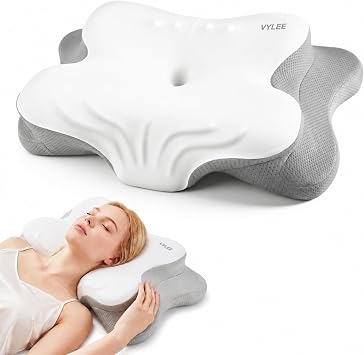
05For a contoured design
VYLEE Memory Foam Pillow, Neck Pillow, Ergonomic Pillow
Grey
A contoured foam option for readers who want to compare a shaped surface with a conventional pillow.
Worth considering: A contour is not universally suitable; check dimensions and fit without assuming a treatment benefit.
View on AmazonCheck on Amazon
Bedding and sleep essentials
Products to consider
Selected through listing research for their specifications and relevance. These are desk-researched selections, not hands-on tests.
| Product | Selected specifications | Consider before choosing |
|---|---|---|
| Silentnight Hotel Collection Pillows 2 Pack | Pack of 2 · White | This comparison describes the selected listing; other sizes and versions may differ. |
| Simba Hybrid Pillow with Stratos Cooling Technology | 45 x 70 cm | This comparison describes the selected listing; other sizes and versions may differ. |
| Panda® Bamboo Memory Foam Pillow, 60 x 40 x 12 cm | memory foam | This comparison describes the selected listing; other sizes and versions may differ. |
| Oliver Bedding Egyptian Cotton Box Pillows 2 Pack- Breathable Hotel Pillows | Pack of 2 · Black | This comparison describes the selected listing; other sizes and versions may differ. |
| VYLEE Memory Foam Pillow, Neck Pillow, Ergonomic Pillow | memory foam · Grey | This comparison describes the selected listing; other sizes and versions may differ. |
Explore pillows
Anti-allergy pillows
Compare covers, fillings and wash instructions, and check what any allergy-related claim actually covers.
Cooling pillows
Look at cover fabrics, fill construction and the limits of cooling claims.
Firm pillows
Compare firmness descriptions with pillow height, shape and your preferred sleeping position.
Memory foam pillows
Explore solid and adjustable foam designs, with reading on materials, odour and care.
Orthopaedic pillows
Examine contour and support descriptions without treating a product label as evidence of pain relief.
Soft pillows
Compare fill, compressibility and height rather than relying on a softness label alone.
From the journal
Pillows: articles & advice
View all pillows articles



The buying guide
A closer look
Finding the best pillows in the UK is about matching loft and firmness to your sleep position, then choosing a fill that balances support, pressure relief and temperature. The wrong loft pushes your neck out of alignment; the right pillow maintains a neutral spine so you wake without stiffness. Use the guidance below to shortlist the ideal height and feel for side, back and stomach sleepers.
Start With Loft (Height) by Sleep Position
Loft determines how well a pillow fills the space between your head and mattress. Side sleepers generally need a higher loft of about 10 to 12 centimetres to bridge the shoulder gap and keep the neck level. Back sleepers are usually most comfortable with a medium loft of about 8 to 10 centimetres that supports the natural curve. Stomach sleepers should use the flattest option they can tolerate to reduce strain, or consider transitioning to side or back if neck pain persists.
Adjustable pillows—usually shredded memory foam or latex—let you add/remove fill at home, fine‑tuning loft to your shoulders, mattress firmness and body shape.
Fill Types and Who They Suit
Memory foam (solid or contoured)
Great for precise neck support and pressure relief. Contoured designs cradle the cervical curve for back and side sleepers with neck pain. Some foams retain heat, so choose breathable covers or perforated cores to improve airflow.
Shredded memory foam or shredded latex
Adjustable loft with a mouldable feel and better airflow than a solid block. A strong choice for combination sleepers and anyone who wants to fine tune height over time.
Latex (solid)
Buoyant lift with quick response. It sleeps cooler and is very durable. An excellent match for side and back sleepers who dislike the slow sink of memory foam but still want strong alignment.
Down or feather
Plush, compressive comfort that feels luxurious but offers less structured support. Best for back and stomach sleepers who prefer a soft cradle. Use downproof cotton casings to prevent feather poke through.
Down alternative (microfibre)
Hypoallergenic, affordable and machine washable. The feel ranges from soft to extra firm depending on fill density, which suits busy households and allergy sensitive sleepers.
Fill Types and Cooling
If you run warm, prioritise airflow. Latex cores, perforated foams and shredded fills breathe better than solid blocks. Look for covers made from breathable cotton, bamboo/viscose, Tencel/lyocell or open‑knit mesh. Removable, machine‑washable covers extend pillow life and hygiene. For allergies, consider tightly woven casings and frequent hot washes (follow labels).
Pain and Posture: Practical Tips
For neck pain, pick consistent, contour friendly support that matches your mattress firmness. Firmer mattresses usually pair with taller pillows, while softer beds allow more shoulder sink, which can mean a slightly lower pillow keeps your neck level. If shoulder pressure wakes you, consider a plusher mattress top or a pillow that lets your head sink just enough to avoid lateral bend. Proper alignment that is not too high or too low can also help keep airways open.
Care and Replacement
Most UK pillowcases fit 50×75 cm. Some brands offer king/super king sizes—check dimensions before buying. Fluff shredded fills daily to distribute material evenly; air foam cores occasionally to reduce odours. Replace foam/latex every 24–36 months and down/alternative every 18–24 months, depending on quality and use.
Quick Checklist Before You Buy
- Pick loft for your sleep position (side = higher, back = mid, stomach = low).
- Choose a fill that matches your feel and temperature preferences (latex for cool lift, memory foam for contouring, down/alt for plushness and easy care).
- Confirm cover breathability and washability; consider anti‑allergy casings if sensitive.
- Reassess after a week—adjustable fills let you fine‑tune height at home.
Questions, answered
FAQs
Memory foam vs latex: what’s better?
Memory foam contours closely and can ease pressure. Latex is livelier, cooler and often more durable.
Are adjustable pillows worth it?
Yes—being able to tweak loft at home solves most fit issues across mattresses and body shapes.
What firmness should I choose?
Side sleepers generally need medium‑firm support, back sleepers medium, and stomach sleepers soft/low to avoid neck strain.